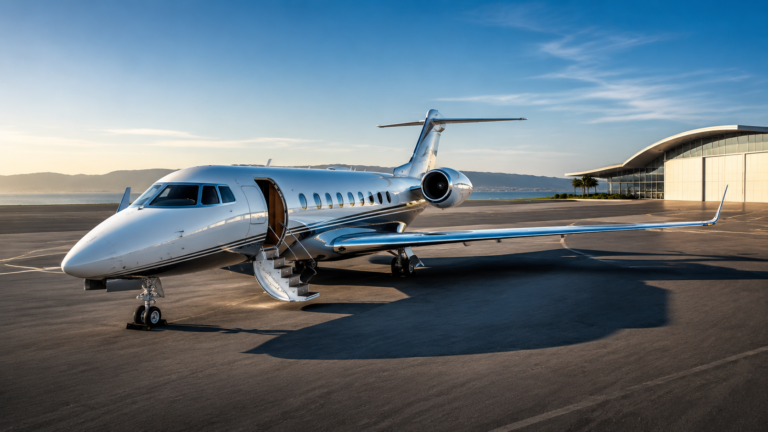
Sustainable aviation fuel private jet adoption is rapidly transforming the landscape of private aviation, offering a lower-carbon alternative for jet owners, operators, and environmentally conscious travelers. This guide explores the current state, challenges, and future of SAF in private jets—equipping you with actionable insights for making informed, sustainable decisions in premium air travel.
Key Takeaways
- SAF consumption in U.S. private aviation rose from 5 million gallons in 2021 to 24.5 million gallons in 2023—a nearly fivefold increase.
- SAF typically costs two to three times more than conventional Jet-A, but financial incentives and policy support can narrow the gap.
- Regulatory blend limits (ASTM D7566) currently cap SAF at 50% of jet fuel, impacting widespread adoption.
- SAF delivers 70-90% lower life-cycle CO₂ emissions while matching traditional Jet-A in performance metrics.
- Market analysts project SAF-related revenues in aviation to grow from USD 4.9 billion in 2026 to over USD 31 billion by 2031, with private-jet SAF demand increasing 25-30% per year.
- Real-world case studies, such as NetJets’ 100% SAF trans-Atlantic flight, demonstrate the feasibility of sustainable aviation fuel private jet operations.
Current State of SAF in Private Aviation
The adoption of sustainable aviation fuel private jet solutions is accelerating, though it still represents a small fraction of total jet fuel use. In 2023, SAF consumption in the United States reached 24.5 million gallons, up from just 5 million gallons in 2021—a nearly fivefold increase [3]. This surge is driven by growing demand from private jet owners, operators, and travelers seeking to reduce their carbon footprint without compromising on performance or flexibility.
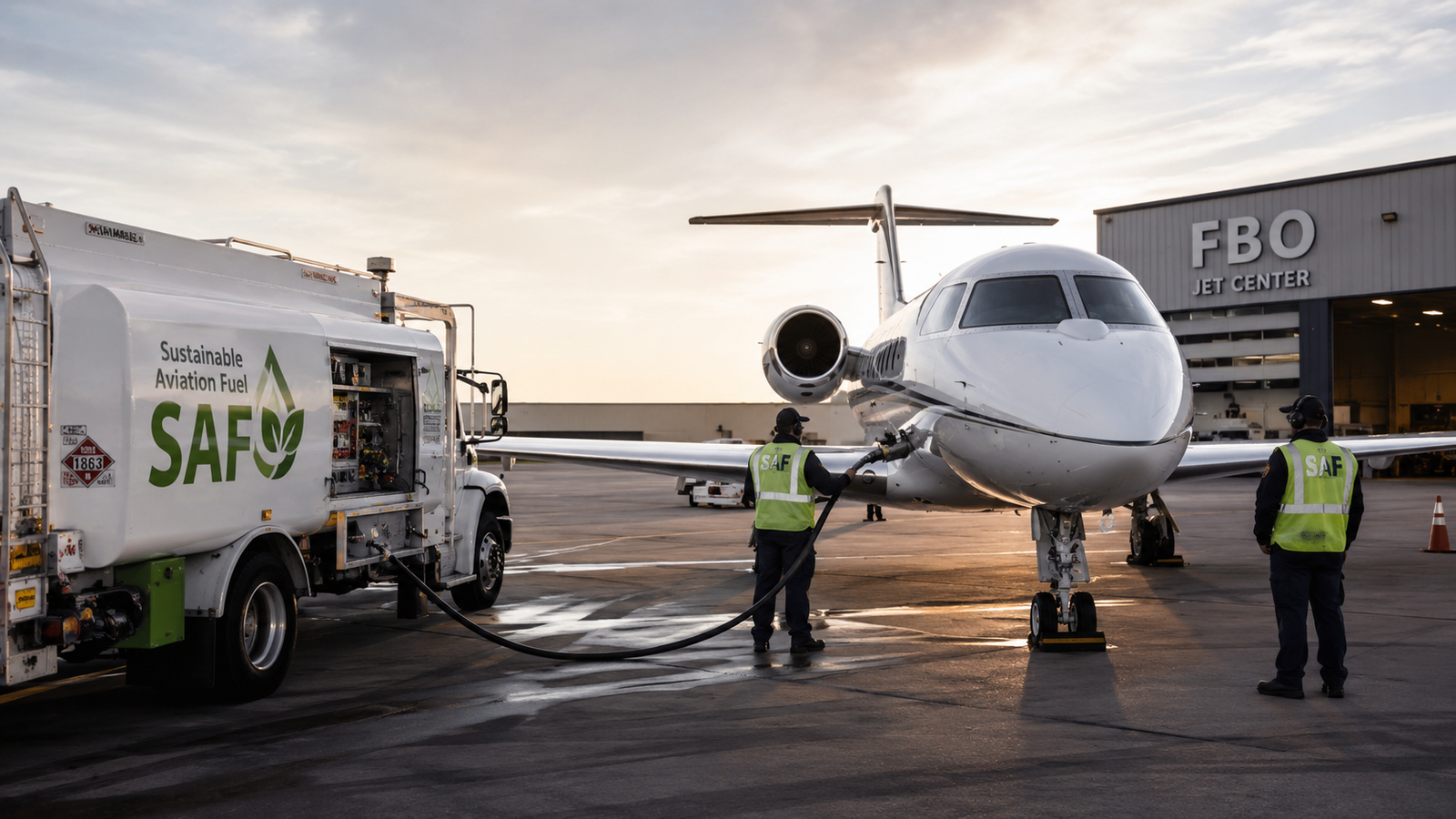
Despite this growth, SAF still accounts for only about 0.1–0.2% of total jet fuel burned in private aviation. However, industry-wide initiatives—such as Victor’s 2024 SAF-booking app and SkyNRG’s Book-and-Claim partnership—are making it easier for operators to access and purchase SAF for any itinerary, regardless of aircraft type or departure location [1]. These developments signal a strong commitment to scaling sustainable solutions within the sector.
For a deeper look at how SAF fits into broader sustainable charter options, see our SAF Private Jet Charter Guide.
Pain Points for Private Jet Owners and Operators
While the promise of SAF private aviation is compelling, several pain points hinder widespread adoption:
- Availability: SAF supply remains limited due to few certified production pathways and restricted blending capacity at airports. Many locations lack dedicated SAF storage infrastructure, making consistent access a logistical challenge [5].
- Cost: SAF typically costs two to three times more than conventional Jet-A fuel. Indicative prices range from USD 2.5–3.5 per gallon for SAF versus USD 0.9–1.1 for fossil-based Jet-A, creating a significant financial barrier for operators and owners.
- Performance Concerns: Although SAF matches Jet-A in most technical specifications, some operators remain cautious about potential impacts on engine wear, reliability, or warranty coverage—especially at higher blend ratios.
These challenges are amplified by regional differences in policy support and the evolving regulatory landscape, which can affect both the cost and ease of SAF adoption.
Regulatory and Technological Challenges
Adopting sustainable aviation fuel private jet solutions is not just a matter of supply and demand—it’s also shaped by regulatory and technological factors:
- Blend Limits: The ASTM D7566 standard currently allows only up to 50% SAF in jet fuel blends, complicating efforts to achieve 100% SAF flights on a routine basis [9].
- Certification Requirements: Each new SAF production pathway must undergo rigorous testing and certification, which can delay market entry and limit available supply.
- Regional Regulations: The EU will require a 5% SAF blend by 2029, while the US is preparing a 45Z tax credit for SAF in 2028. The ICAO’s CORSIA offset scheme and anticipated revisions in 2029 may further influence compliance and adoption [10].
- Emerging Technologies: Innovations such as power-to-liquid e-fuels and catalytic hydrothermolysis could double feedstock efficiency by 2030, potentially increasing SAF supply and reducing costs.
Operators must stay informed about evolving standards and technological advancements to ensure compliance and maximize the benefits of SAF.
Financial Considerations for Transitioning to SAF
Transitioning to SAF private aviation involves both direct and indirect costs, but also presents opportunities for savings and incentives:
- Transition Costs: For a typical midsize business jet, no hardware changes are required for blends up to 30%. Certification paperwork may cost $30,000–$50,000 per aircraft, while the SAF fuel premium adds approximately USD 0.6–1.5 per gallon.
- Financial Incentives: Federal SAF tax credits, state renewable-fuel incentives, and carbon-offset credits can return $0.10–$0.25 per gallon. In regions with strong policy support, net cost differentials can narrow to just 10–20% above baseline fuel costs.
- Long-Term Savings: As SAF production scales and regulatory incentives increase, the cost gap is expected to shrink further, making sustainable aviation fuel private jet operations more economically viable.

For a breakdown of typical private jet charter costs and how fuel choices impact your bottom line, see our Private Jet Charter Cost 2026 Guide.
Want to Compare the Real Cost?
Get an indicative quote to compare full charter pricing with your current travel options and fuel choices.
Performance Metrics of SAF vs. Traditional Jet Fuels
One of the most compelling arguments for SAF private aviation is that it delivers substantial environmental benefits without sacrificing performance:
| Metric | SAF | Conventional Jet-A |
|---|---|---|
| Life-cycle CO₂ Emissions | 70–90% lower | Baseline |
| Energy Density | ≈42.8 MJ/kg | ≈42.8 MJ/kg |
| Freeze Point | ≤ -47°C | ≤ -47°C |
| Flash Point | ≥ 38°C | ≥ 38°C |
| Lubricity | Comparable | Standard |
| Operational Impact | Minimal | Standard |
Operators report no adverse effects on engine wear or reliability, and some blends even show slightly reduced turbine-inlet temperatures and marginally lower specific fuel consumption. For more on how jet type and fuel choice affect performance, see our Cessna Citation Mustang vs C550 Comparison.
Future Projections and Market Growth
The outlook for sustainable aviation fuel private jet adoption is robust. Market analysts project SAF-related revenues in aviation to climb from about USD 4.9 billion in 2026 to over USD 31 billion by 2031—a compound annual growth rate of 45% [2]. Private-jet SAF demand is expected to grow 25–30% per year, reaching 5–7% of the sector’s fuel mix by 2030.
Key industry milestones include:
- 2022: ASTM D7566 certification of new SAF production pathways
- 2023: First fully SAF-powered private jet flight (NetJets)
- 2024: Launch of Victor’s SAF app and SkyNRG-Microsoft Book-and-Claim program
- 2025: United’s scaling of neat SAF purchases to 27 million gallons
- 2026: US Department of Energy targets a 12,000% increase in SAF output
- 2027–2029: EU and ICAO regulatory milestones to further drive adoption
For a look at how these trends may impact your travel options, explore our Private Jet Charter 2026 Guide.
Case Studies of Successful SAF Implementation
Several leading private aviation companies have demonstrated the practical feasibility of SAF:
- NetJets: In 2023, NetJets completed a trans-Atlantic flight using 100% SAF, proving that sustainable aviation fuel private jet operations can go beyond messaging to real-world impact.
- Flexjet: Launched a SAF-fuel-offset program in 2024, enabling clients to offset emissions on every flight.
- VistaJet and Wheels Up: Both source SAF through partnerships with producers like Neste, World Energy, and SkyNRG, using blended fuel contracts and direct off-take agreements tied to airport-based storage hubs.
These case studies illustrate best practices in procurement, client engagement, and operational integration of SAF. For more on how top operators are innovating, see our Best Private Jet Charter Companies 2026 Rankings.
Limitations and Common Pitfalls
Despite rapid progress, several limitations and pitfalls remain for those considering sustainable aviation fuel private jet adoption:
- Supply Scarcity: SAF production is still a fraction of total jet fuel output, and meeting ambitious climate targets will require exponential scaling.
- Feedstock Competition: Sustainable feedstocks are limited and compete with other sectors, leading to volatile prices and supply uncertainties.
- Regulatory Complexity: Varying regional mandates, blend limits, and certification requirements can complicate procurement and compliance.
- Greenwashing Risks: Not all “sustainable” claims are equal—ensure your provider’s SAF sourcing and offset programs are transparent and verifiable [6].
For travelers seeking to maximize value while minimizing carbon impact, consider flexible options such as last-minute empty leg flights or empty leg deals—these can further reduce emissions by utilizing repositioning flights that would otherwise fly empty.

Looking for Flexible, Lower-Impact Flight Options?
Check current empty leg opportunities if your schedule and departure airport are flexible and you want to further reduce emissions.
Conclusion
Sustainable aviation fuel private jet adoption is no longer a distant goal—it’s a rapidly evolving reality that offers meaningful carbon reductions, robust performance, and growing financial viability. While challenges remain around supply, cost, and regulation, the sector is moving swiftly toward broader SAF integration. For private jet owners, operators, and travelers, now is the time to engage with SAF solutions, leverage available incentives, and contribute to a more sustainable future in private aviation. As the market matures, sustainable aviation fuel private jet travel will become an increasingly practical and responsible choice for premium flyers.
FAQ
What is sustainable aviation fuel private jet and how does it work?
Sustainable aviation fuel private jet refers to the use of SAF—produced from renewable feedstocks such as waste oils, agricultural residues, or synthetic processes—in private jet operations. SAF can be blended with conventional Jet-A and used in existing aircraft without hardware modifications, reducing life-cycle CO₂ emissions by 70–90%.
How much more expensive is SAF compared to regular jet fuel?
SAF typically costs two to three times more than conventional Jet-A fuel. However, financial incentives, tax credits, and policy support can help narrow the cost gap, especially in regions with strong sustainability mandates.
Are there performance differences between SAF and traditional jet fuel?
No significant performance differences exist. SAF matches Jet-A in energy density, freeze point, flash point, and lubricity. Operators report minimal operational impact and no adverse effects on engine reliability or wear.
Can I book a private jet that uses SAF for my next flight?
Yes, many leading private jet operators offer SAF options or Book-and-Claim programs. Availability varies by airport and region, so it’s best to confirm with your charter provider. For more on booking sustainable charters, see our SAF Private Jet Charter Guide.
What are the main challenges to wider SAF adoption in private aviation?
The main challenges include limited SAF supply, higher costs compared to conventional fuel, regulatory blend limits, and logistical complexities in distribution and certification. Ongoing technological and policy developments are expected to address many of these barriers over time.