Two Jets Walk into a Hangar…
The Gulfstream G700 vs. Bombardier Global 7500 debate is the most heated rivalry in private aviation today. Thirty thousand feet above the Atlantic, you’re sipping a single-origin espresso at Mach 0.90 while your team sleeps on a flat-bed in the aft cabin. The air smells of bespoke leather and polished walnut. This isn’t a dream — this is what owning or chartering either of these two titans actually feels like.
For decades, these two aircraft have traded punches for the crown of the world’s most desirable ultra-long-range business jet. Gulfstream, the Georgian giant, versus Bombardier, the Montreal maverick. Speed versus range. Elegance versus endurance. In 2026, the rivalry has never been sharper — and choosing wrong could mean millions of dollars and thousands of uncomfortable miles.
Let’s settle this, once and for all.
The Speed King: Gulfstream G700
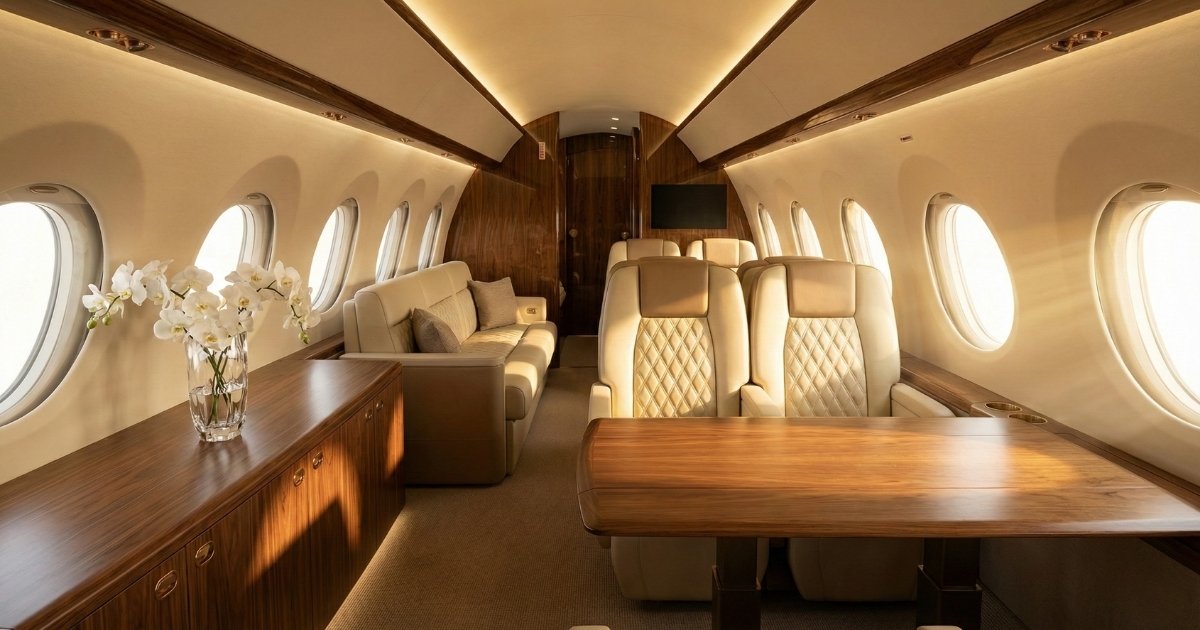
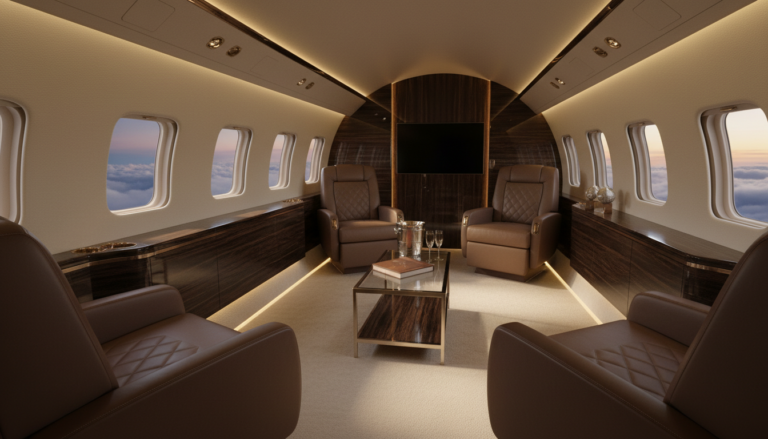
Step aboard the G700, and the first thing you notice isn’t its size — though at 56 feet long and 8 feet wide, the cabin is cathedral-like. It’s the light.
Those 20 signature panoramic oval windows — the largest in any purpose-built business jet — flood the interior with natural daylight in a way that makes you forget you’re in an aircraft at all. Gulfstream understood something subtle here: the richest people in the world don’t just want to travel fast. They want to arrive feeling human.
The Engines That Change Everything
The G700 is powered by twin Rolls-Royce Pearl 700 engines, each producing 18,255 lbf of thrust. These are not engines. These are instruments. They propel the G700 to a Maximum Operating Mach of 0.935 — hovering at 92% of the speed of sound — with a high-speed cruise of Mach 0.90 that it can sustain for hours on end.
By the numbers:
Five Ways to Live at 51,000 Feet
The G700 doesn’t have “sections.” It has five distinct living areas — a forward club, a conference zone, a dining space, an entertainment lounge, and a full master suite. You move between them the way you’d move between rooms in a penthouse.
Here’s the detail that almost no one talks about: the Circadian Lighting System. Flying New York to Dubai, you lose seven hours. The G700’s proprietary lighting technology dynamically adjusts cabin illumination throughout the flight to help your body clock recalibrate. Less melatonin disruption. Better sleep. You arrive in Dubai sharp, not shattered. For CEOs signing billion-dollar deals on landing day, this is not a luxury — it’s a competitive edge.
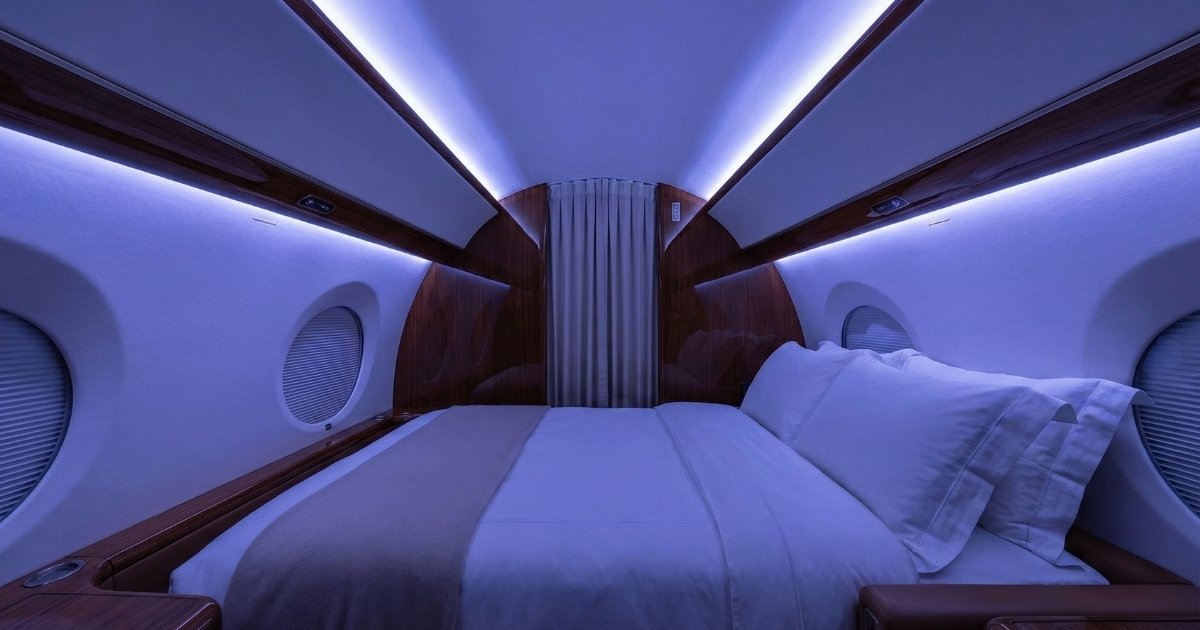
The Range Master: Bombardier Global 7500
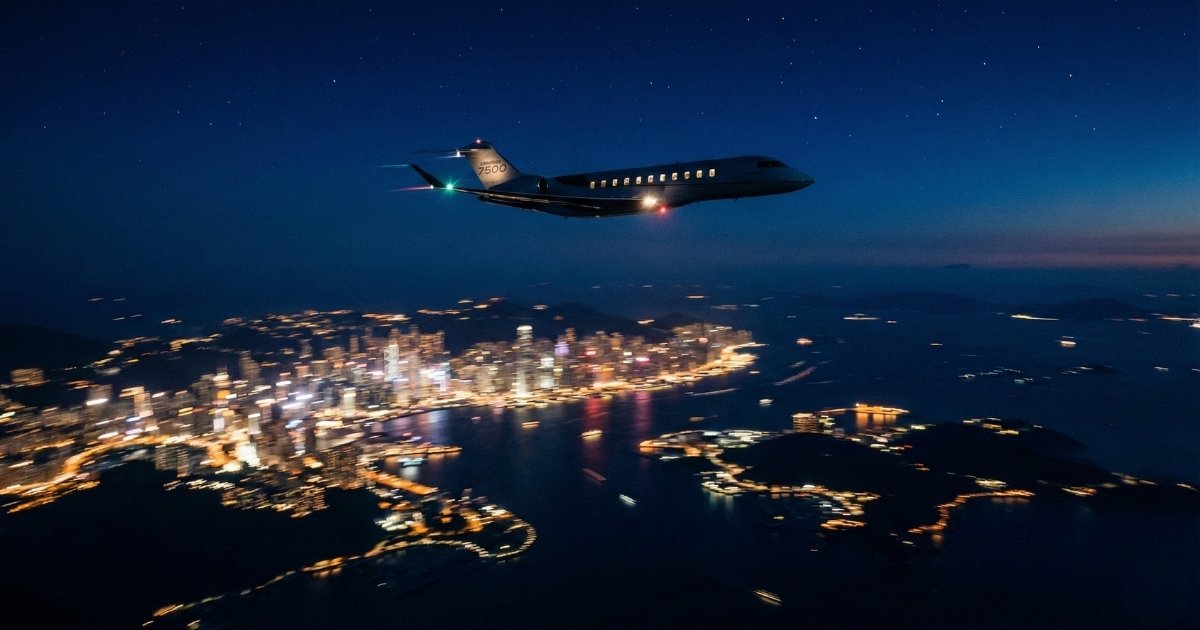
If the G700 is a sprinter, the Global 7500 is an ironman athlete — built not just to go fast, but to go forever. At a baseline range of 7,700 nautical miles — extendable to 8,000 nm with an upgrade — it can fly New York to Hong Kong nonstop, no fuel stop, no deviation.
GE Passport Power & the Smooth Flex Wing
The GE Passport engines powering the Global 7500 generate 18,920 lbf of thrust each, pushing its Maximum Operating Mach to 0.925. Comparable territory to the G700 at cruise. But where Bombardier truly separated itself from every competitor is with the Smooth Flex Wing — a flexible, continuously-morphing wing architecture that bends slightly in turbulence, absorbing bumps instead of transferring them to the cabin. The result? You can genuinely sleep through weather that would rattle passengers on lesser jets.
By the numbers:
The Nuage Seat: A Patent Worth Knowing
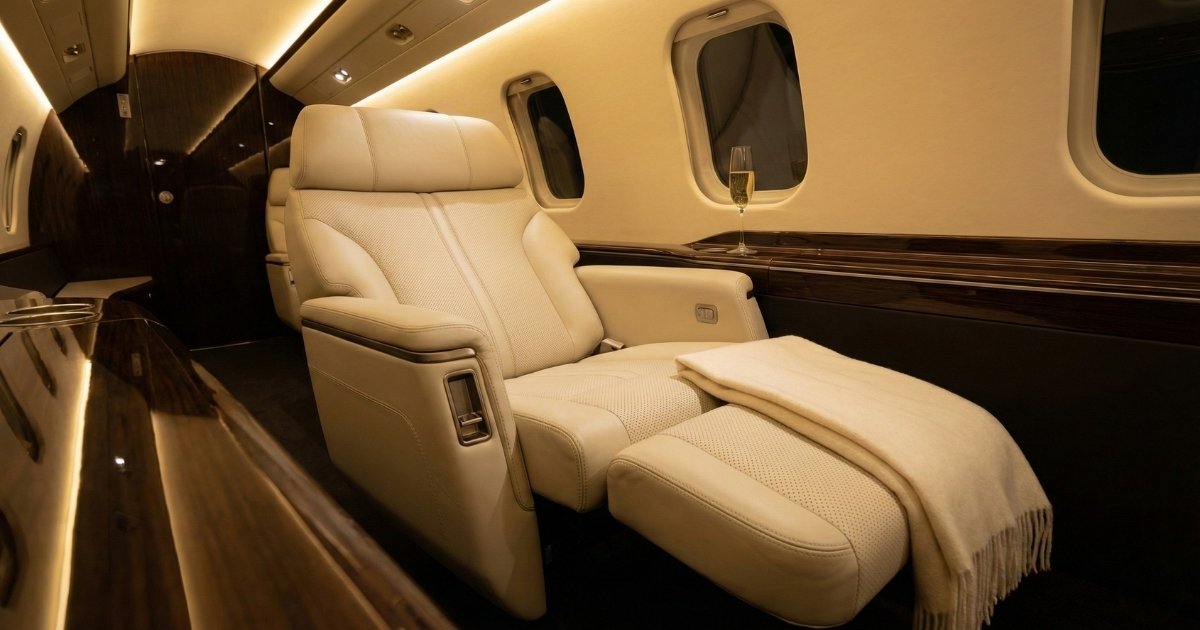
Bombardier spent years developing the Nuage Seat — a patented, ergonomically adjustable executive chair that reclines into what the company calls a zero-gravity position, redistributing body weight across pressure points the way a NASA astronaut cradles a launch. It’s the most anatomically thoughtful seat in business aviation. On a 16-hour flight, that matters more than any spec sheet will tell you. The four Nuage seats in the forward club suite alone justify serious consideration of this aircraft.
Interior Face-Off
The cabins are a study in contrasting philosophies.
| Feature | Gulfstream G700 🇺🇸 | Bombardier Global 7500 🇨🇦 |
|---|---|---|
| Cabin Length | 56 ft (Longest) | 54 ft 5 in |
| Cabin Width | 8 ft | 8 ft |
| Living Zones | 5 Distinct Areas | 4 Zones |
| Signature Feature | 20 Panoramic Oval Windows | Permanent Master Suite |
| Sleep System | Flat-bed Conversion | Dedicated Bedroom (Real Bed) |
| Wellness Tech | Circadian Lighting System ☀️ | Smooth Flex Wing / Nuage Seat 💺 |
| Atmosphere | Bright, Gallery-like | Intimate, Hotel-suite feel |
The G700 wins on sheer spatial volume and natural light. Walk through it, and the cabin feels more like a private residence than a transport vehicle. But the Global 7500’s master suite — with a permanently configured bed, not a fold-out — is the decisive argument for frequent overnight fliers. You don’t convert anything. You simply close the door and sleep.
The Price Tag: What These Dreams Actually Cost
No one who can afford one of these aircraft flinches at the price. But here it is.
Purchase price (2026 new):
Charter rates (ultra-long-range class):
- Typical hourly rate: $16,000–$20,000/hour
- A New York to London charter on either aircraft: approximately $125,000–$160,000 all-in
These figures flex with positioning fees, landing rights, crew costs, and catering. For buyers, annual operating costs add another $4–6M on top of acquisition. Neither of these jets is a cost — they’re infrastructure.
The Smart Traveler’s Hack: Empty Legs
Here’s what the ultra-wealthy know and almost no one else does. You don’t have to own or charter these jets at full price.
When a G700 or Global 7500 repositions between charters — flying empty to pick up the next passenger — operators need to offset the cost of that flight. These are called “empty leg” deals, and they can slash the standard charter rate by up to 75%.
A $140,000 New York-to-London flight on a Global 7500 could, in the right circumstances, cost you $35,000–$50,000. Same aircraft. Same bespoke leather. Same champagne.
💡 Pro Tip: Platforms like JetLuxSearch aggregate real-time empty leg availability from operators worldwide — letting you search live deals on ultra-long-range jets like the G700 and Global 7500. Villiers Jets is another reliable broker for both full charters and empty legs, with access to a fleet of 10,000+ aircraft globally. Set alerts, stay flexible on departure windows by 12–24 hours, and you can fly at a fraction of the published rate.
Gulfstream G700 vs. Bombardier Global 7500: The Verdict
If you’re buying: This comes down to one question — do you sleep on planes?
- Choose the Gulfstream G700 if speed, space, and the most luminous cabin in aviation are your priorities. The Circadian Lighting System and five distinct living zones make it the undisputed king of productivity and comfort at altitude. The Rolls-Royce Pearl 700 engines are a statement piece in themselves.
- Choose the Bombardier Global 7500 if you operate across the Pacific regularly and refuse to land before you’re ready. The Smooth Flex Wing, Nuage Seat, and permanent bedroom make it the world’s best sleeping machine at 51,000 feet. For those flying Hong Kong to London or Dubai to São Paulo, the 7,700 nm range without diversion is irreplaceable.
If you’re chartering: Book the G700 for daytime productivity trips. Book the Global 7500 for overnight transcons where arrival condition matters.
These are not compromises. These are the two best business jets ever built. The only wrong choice is flying commercial.
Frequently Asked Questions
Expert insights on the G700 & Global 7500
The G700 has an NBAA IFR range of approximately 7,500–7,750 nautical miles. This comfortably covers ultra-long-haul routes like New York to Tokyo or Los Angeles to London without needing a fuel stop.
At cruise, both aircraft perform comparably — roughly Mach 0.90. However, the G700 has a slightly higher maximum operating speed of Mach 0.935 (vs. 0.925 for the Global 7500). In real-world travel, the difference in arrival time is negligible.
Absolutely safe. An empty leg is simply a repositioning flight on a fully certified, operator-managed aircraft — same jet, same pilots, same safety standards. The only difference is the fixed schedule. Savings of 25–75% are routinely available for flexible travelers.